As an AV installer, manufacturer, distributor, or rep, you likely spend a lot of time testing or demoing audio gear. For the installer, it is a crucial part of each and every install job. You might spend one day actually installing the equipment, and the rest of the week passing audio through it – testing different zones, tweaking settings, and tuning your systems. For others in the industry, performing and listening to gear demos is key to attracting new clients and partners.
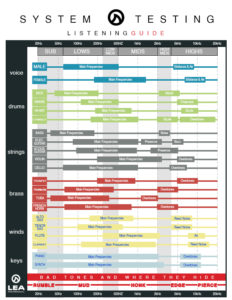
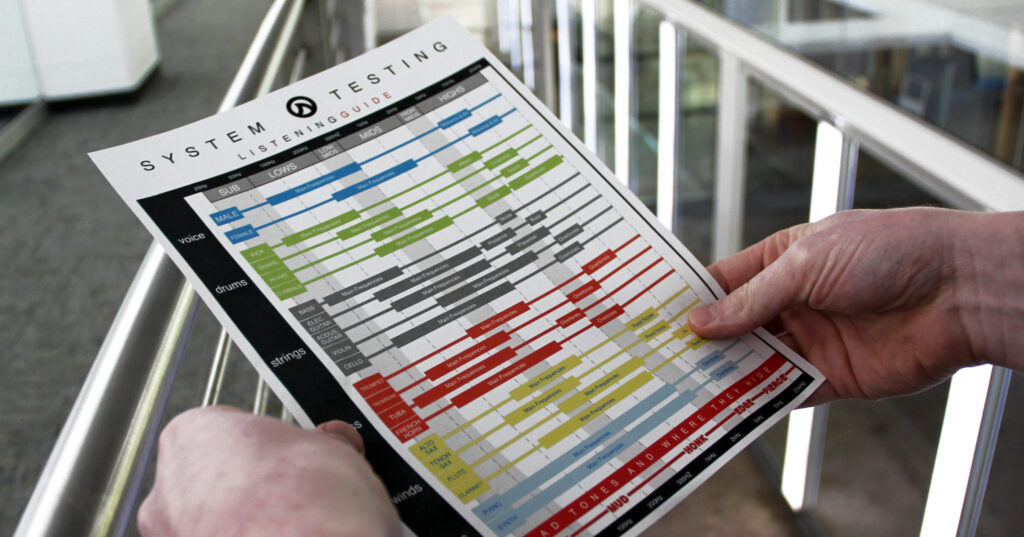
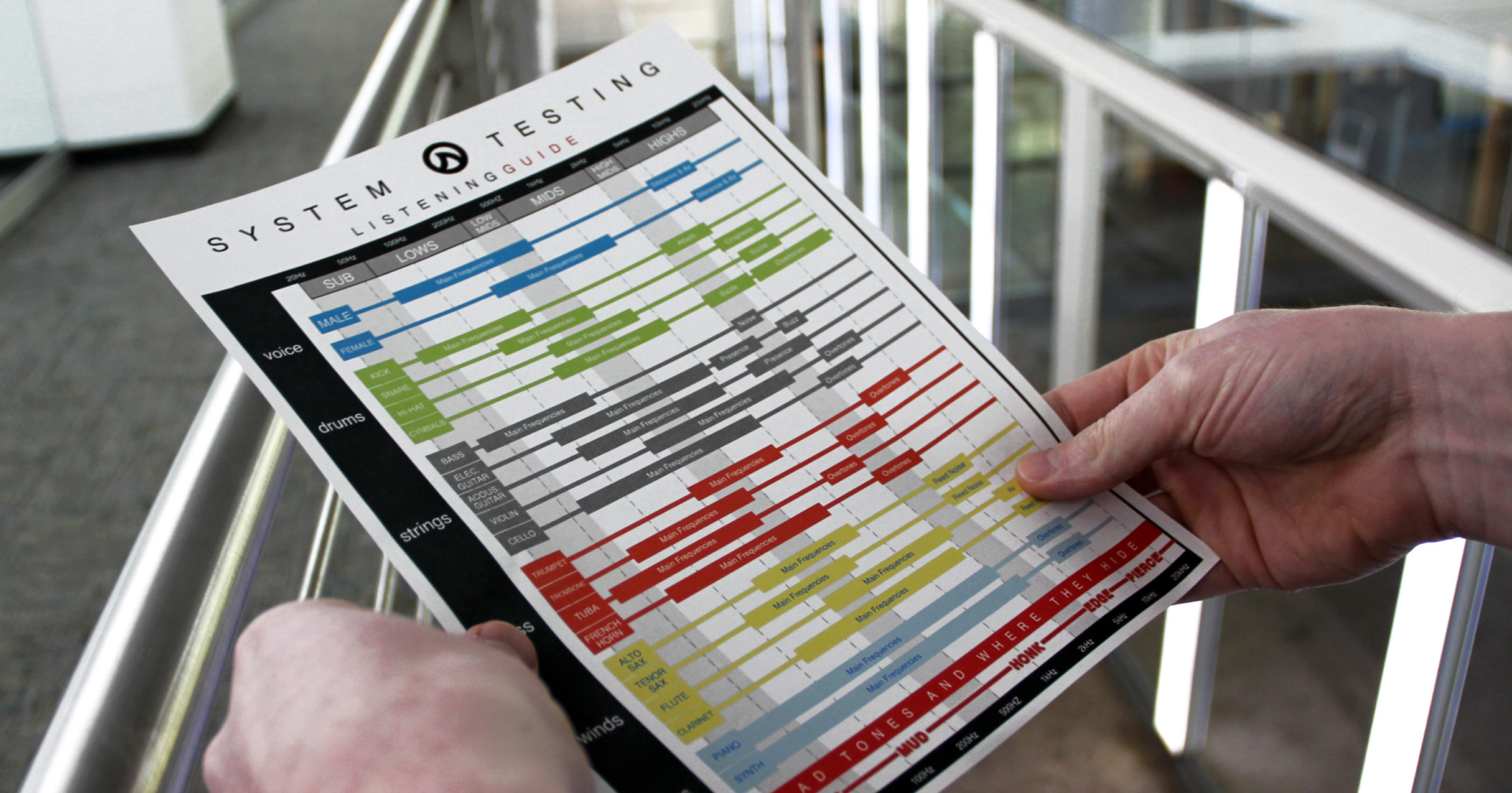
With so many of us dependent upon critical audio listening, it is important to have a greater understanding of what we are listening to and for. We all love the tools and technologies that help us plot our systems to specific rooms and add virtually effortless EQ and DSP, but in the end, what truly matters is how it sounds to your ear. It doesn’t matter how perfectly plotted your system is in software if it still sounds bad to your ear. That’s why we created this “System Testing Listening Guide” as a quick reference tool.
Use this guide:
To quickly identify problem frequencies
To understand frequency ranges and the tones that occupy them
**This guide is intended to provide a general visual comparison of different instruments and tones throughout a frequency spectrum. While it may supplement your understanding of the frequency spectrum, it is important to remember to follow your ear. When it comes to audio listening, your ear is your most important and reliable tool and can trump everything else.
Listening Guide Terminology
Sub – The Sub Bass frequency range occupies the space between 20Hz – 60Hz. These are the tones that come through your sub speakers and are generally felt more than they are heard.
Lows – The Low Frequency range occupies the space between 60Hz – 250Hz. These are the tones that are fundamental to kick drum and bass instruments such as bass guitar, tuba, and trombone.
Low Mids – The Low Mids Frequency range is the space between 250Hz – 500Hz. While many instrumental tones occupy this range, it is most notable as a bass harmonic overtone range.
Mids – The Mid Frequency range is the space between 500Hz – 2kHz. This is where about 80% of the sound we hear takes place. This range should showcase clear details that aren’t too forward or recessed in the mix.
High Mids – The High Mids Frequency range is the space between 2kHz – 4kHz. These are the tones that deliver attack on percussive instruments.
Highs – The High Frequency range is the space between 4kHz – 20kHz. This is where a lot of overtones live which provide more presence and harmonic brilliance which gives a sparkly, sizzly sound to the beginning and end of tones as well as the air of a tone.
Main Frequencies – This is where each instrument’s most prominent, clear, and audible frequencies live.
Sibilance – This the effect that takes place when a vocalist pronounces consonant syllables like S, T, and Z. Typically, sibilance is referred to as a negative effect.
Air – This is the perceived liveliness in the upper frequencies. Air typically adds a new dimension to vocal tracks, giving an open and realistic tone.
Attack – This is the introduction of a tone or the amount frequencies, expressed when an instrument plays. As soon as an instrument begins, it starts with an attack. It’s typically stronger in percussive instruments.
Crispness – This refers to an instrument tone that is clear and bright with a bit of an edge to it.
Sizzle – This refers to an instrument tone that has a bright and grainy sound. Much like the sizzle of bacon cooking in a pan.
Overtones – These are frequencies that are heard above the main frequencies of an instrument. Often referred to as harmonics – they tend to add color and space to a sound.
Noise – an unpleasant sound within any given frequency.
Presence – This refers to the perceived closeness of a sound. When an instrument or recording lacks presence, it can sound far away rather than close and clear.
Buzz – This typically refers to stringed and fretted instruments. With these instruments it is common to hear small amounts of buzz which results from the strings vibrating quickly against the frets.
Reed Noise – Occurs in woodwind instruments. When the reed vibrates quickly against the mouthpiece to achieve sound, it also creates a sound texture that can be heard in the high frequency range.
Rumble – refers to a continuous deep and resonant sound in the sub frequency range which, even when not heard, can affect the sound of other frequencies.
Mud – Refers to a lack of clarity in the low end which results in other frequencies blending together.
Honk – Refers to an abrasive and brassy sound in the mid range that is unpleasant and causes ear fatigue.
Edge – Refers to a harsh characteristic often found in guitar tones. It can feel sharp and cutting to your ears.
Pierce – Refers to a piercing tonal quality found in the high range. Imagine the sound of your smoke detector beeping in your ear.
Unwanted Tones
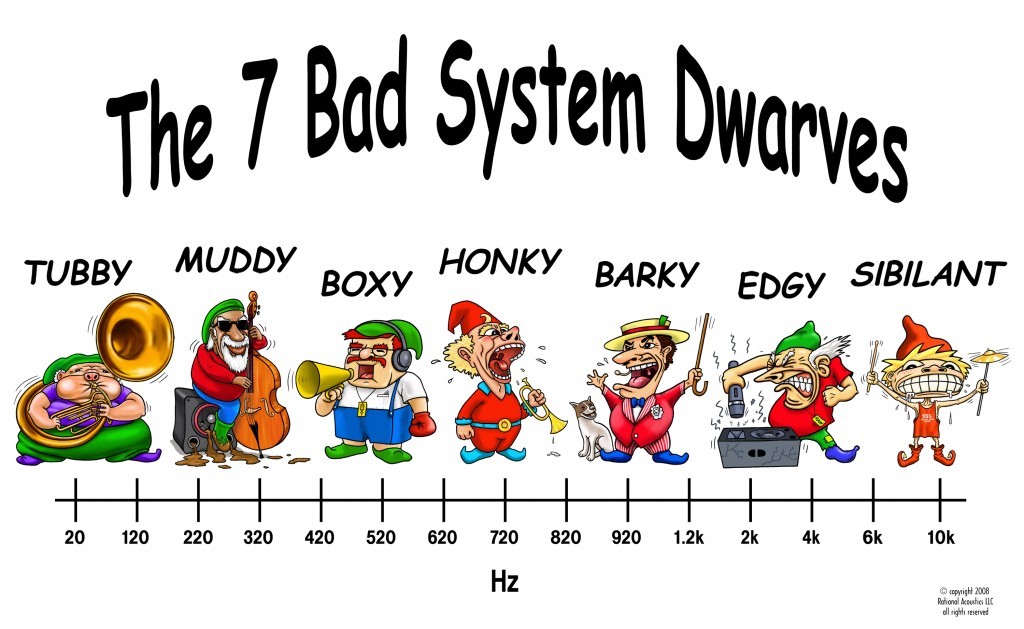
In our listening guide, we also included five of the most common unwanted tones found in the frequency spectrum. Hopefully, this will provide a quick way to identify where unwanted tones are happening in order to correct them. However, if you want more details on these unwanted tones, we really like this depiction from Rational Acoustics:
You can check out more detailed descriptions of each on their website.
System Testing Playlist
If you’d like to put this Listening guide to the test, we’ve created a System Testing Playlist which contains our favorite tracks and detailed descriptions for testing out the full capabilities of your audio systems:
If you have any question or feedback about our System Testing Listening Guide, please feel free to leave a comment below or reach out to us on oursocial media channels! Happy Listening!
Want more LEA content delivered directly to your inbox? Enter your email address below to be subscribed to our monthly newsletter and keep up with all of the latest news and content from LEA Professional.
This website uses cookies to improve your experience. We'll assume you're ok with this, but you can opt-out if you wish.AcceptRejectRead More
Privacy & Cookies Policy
Privacy Overview
This website uses cookies to improve your experience while you navigate through the website. Out of these, the cookies that are categorized as necessary are stored on your browser as they are essential for the working of basic functionalities of the website. We also use third-party cookies that help us analyze and understand how you use this website. These cookies will be stored in your browser only with your consent. You also have the option to opt-out of these cookies. But opting out of some of these cookies may affect your browsing experience.
Necessary cookies are absolutely essential for the website to function properly. This category only includes cookies that ensures basic functionalities and security features of the website. These cookies do not store any personal information.
Any cookies that may not be particularly necessary for the website to function and is used specifically to collect user personal data via analytics, ads, other embedded contents are termed as non-necessary cookies. It is mandatory to procure user consent prior to running these cookies on your website.